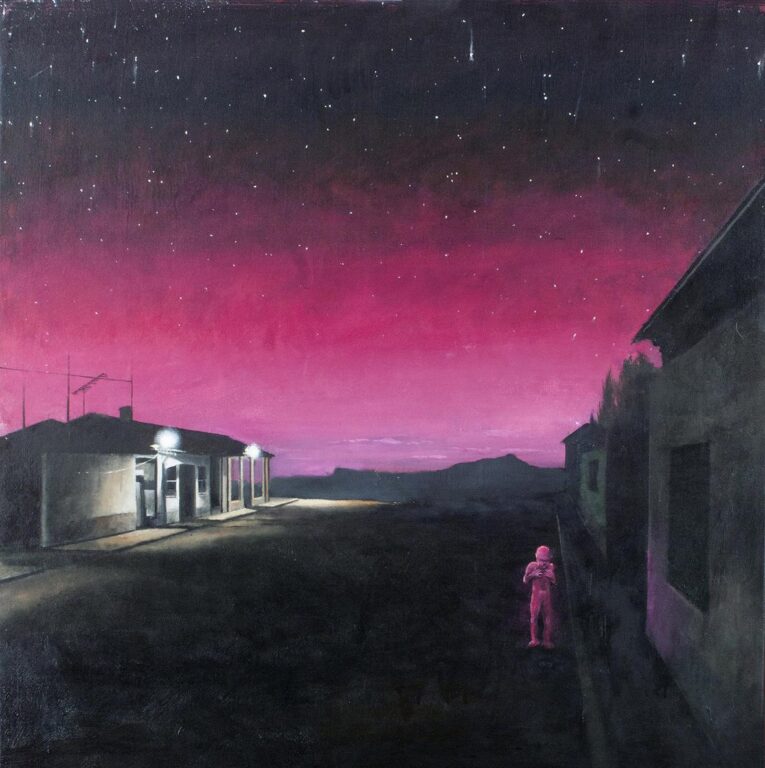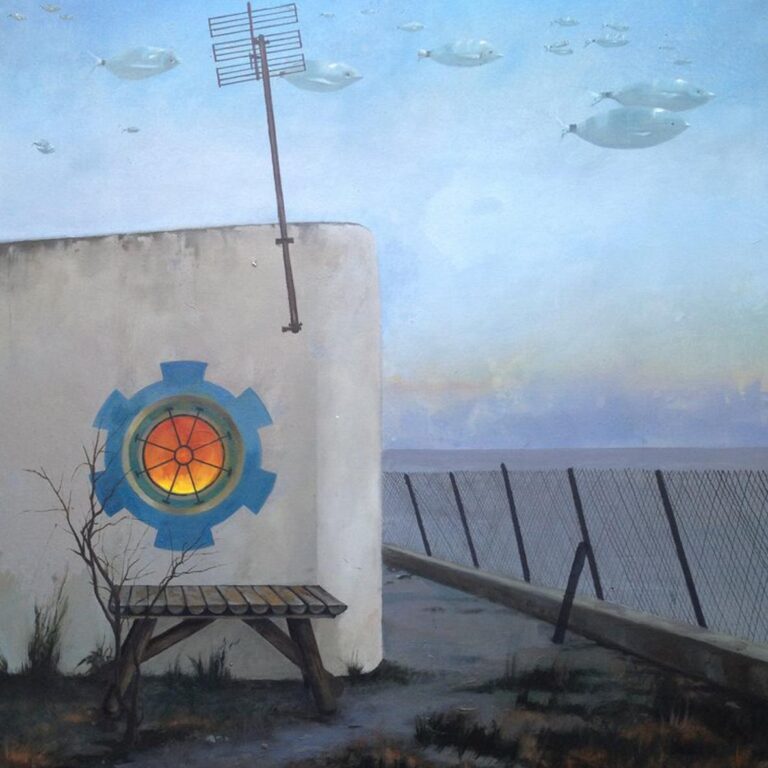
Spanish painter José Enguídanos was born in 1962 in Albacete, a small provincial town in the Spanish region of Castile-La Mancha. He had a difficult childhood, marked by violence and rebellion against the social constraints of Franco’s dictatorship and the political utopian ideal of revolution.
In the early 1980s, he exhibited for the first time in his hometown and received his first art prize for painting. He then began studying art at the Escuela de Artes y Oficios de Murcia whilst working for an interior design firm in Madrid. After graduating, he returned to Albacete, where he set up his studio and continues to live and work to this day. Since 2000, he has worked as a freelance artist, presenting his works in solo and group exhibitions in Spain and abroad. His works are featured in private and public collections, including the renowned Fundación La Caíxa in Barcelona.
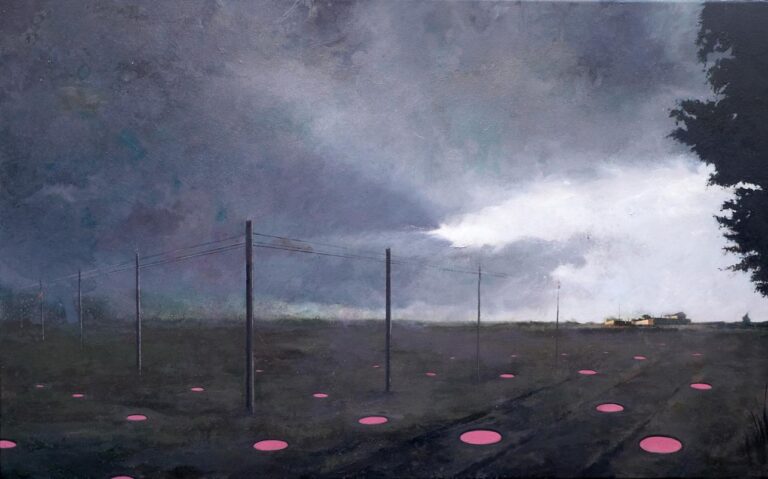
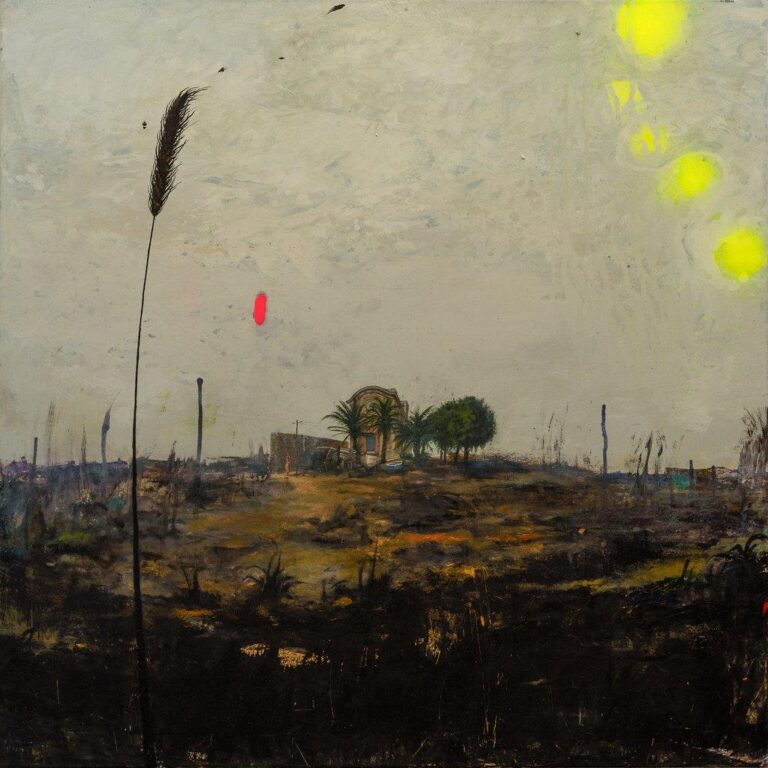
Enguídanos’ visual language is poetic and highly individual, yet deeply rooted in the traditions of his country and art history. His captivating landscapes evoke echoes of metaphysical and surrealist painting, whilst simultaneously drawing associations with the pioneering styles of Italian and Spanish Baroque painting, such as Caravaggio’s chiaroscuro and Goya’s pinturas negras. With their distinctive compositions of light, the powerful atmospheric effect of his silent landscapes, the abandoned buildings and the enigmatic figures that occasionally inhabit them, Enguídanos’ works evoke a peculiar state between dream and reality.
1962: José Enguídanos (also known as Pepe) is born on January 22 in Albacete, Spain.
1971–1974: He has a troubled youth- a time marked by violence; rebellion against the social constraints of Francoist Spain; and the political and utopian idea of revolution.
1975–1977: He returns to school and graduates. Joins an extreme left-wing youth party.
1980–1981: He finds a way out of this incessant personal quest for meaning by taking up art seriously. He holds his first solo exhibition in his hometown of Albacete. During his military service, he wins his very first painting prize.
1982–1983: Completes his military service and starts studying painting at the Escuela de Artes y Oficios de Murcia.
1984: He goes on to win a contemporary art scholarship in the studio of Spanish painter José Guerrero (†1991) in the Circulo de Bellas Artes in Madrid.
1985–1987: He switches to the painting and industrial design department and works in a renowned interior design studio in Madrid. In the meantime, he has completely abandoned any activity motivated by ideology.
1988: After graduating, he leaves Madrid and sets up his own studio in his home city of Albacete.
1995: Becomes a regular participant in national biennales and group exhibitions.
1996–1997: He has his first comprehensive solo exhibition in the City Museum, Albacete. This is followed by his very successful solo exhibition outside Albacete, at the 3 Punts Art Gallery in Barcelona. Enguídanos goes on to work primarily as a painter, with interior design as a subsidiary activity.
1998: Enguídanos has had other solo exhibitions throughout Spain, including in Madrid, Barcelona, Málaga, Pamplona, Santiago de Compostela, Alicante and Marbella.
2001: The renowned Fundación ‘La Caíxa’ in Barcelona acquires works by José Enguídanos for its permanent collection.
2007: Participates in his first international group exhibition presented by DIE GALERIE in Frankfurt am Main. His work is showed in the comprehensive Spanish Figurative Art exhibition alongside works by Joan Miró, Pablo Picasso, Salvador Dalí, Antonio Saura, Eduardo Arroyo, Miguel Berrocal, José Ortega, Xavier Franquesa, Eduardo Chillida Belzunce, Jordi Isern and Carlos García.
2010: DIE GALERIE in Frankfurt am Main stages José Enguídanos’ first international solo exhibition featuring around 50 works created between 2002 and 2009.
2014: Second solo exhibition ‘José Enguídanos – New paintings’ in DIE GALERIE Frankfurt am Main.
José Enguídanos lives and works in Albacete, Spain.